

Radiocarbon Dating: The Shroud of Turin
- Page ID
- 1475
The Shroud of Turin is a linen wrapping cloth that appears to possess the image of Jesus Christ. Some people believe this to be the cloth that he was wrapped in following his crucifixion. In 1988, several groups of scientists were allowed samples of the shroud to subject these samples to 14C dating. The carbon-14 to carbon-12 ratio was found to be 92% of that in living organisms.
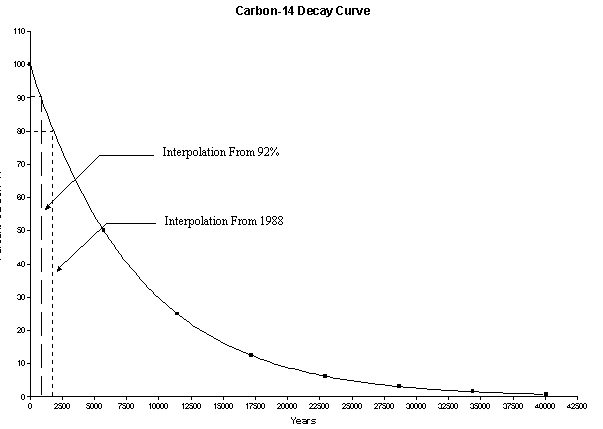
On the above graph, which depicts the decay curve for carbon-14, you can draw a line from 1988 up to the curve and then from this intersection over to the percent value on the Y axis. The value obtained from the curve is about 80%. This means that the Shroud of Turin may be younger than was previously thought.
The age of the shroud can be obtained from the graph by starting at 92% and drawing a line to the curve. Draw a line from this intersection down to the years and the value obtained is about 1000 AD, which means that the Shroud of Turin was probably created in the Middle Ages.
Contributors
- Prof. Richard Banks, Boise State University, Emeritus